On Sunday, we hired a motorbike and road out from Thakek, Laos, into the surrounding area. It was sunny and the road was reasonably good. To get to the first cave we turned off the main road, following a red dirt road through a local village ... and then another village ... and then getting directions and turning back, getting off the bike and following a walking track. The track led across flat land, past rice fields and skinny cows munching on grass in an unused area, to a sudden outcrop of limestone hills. At the base of one of the hills were steps leading up to a shrine, and more steps from there weaving up into a cave opening. The cave was decorated with little colourful flags and woven god's eyes, and further inwards were several shrines: images of buddha with incense and offerings.
The second cave was a lot further off the beaten track. This was only discovered recently - 2004 - by a local who was out hunting for bats. Climbing a cliff face, he entered a cave to discover over 200 images of buddha inside. Apparently he didn't tell anyone for days; the story goes he was too frightened he had imagined it all. To get inside I had to don a traditional skirt, and we took off shoes and hats. Bending down to go through a narrow openeing, it was a surprise to enter and find ... a staircase with a handrail to guide us down into the cavernous space inside, reasonably lit by fluros and ventilated with a fan! Nice. All the buddha statues were guarded by a few local people. We looked around, and sat down, and an elderly man came to each of us, recited chants over our right hands and before tying plaited orange string around the wrist. Although we couldn't understand what was said, it was a peaceful gesture that meant something to the people doing it, and that was enough.
We visited a few other caves, and the final one I went into by myself (there was a large entrance fee and by now we'd seen a few). This was the biggest one by far I'd entered. Steps led up and around curving walls, so I lost sight of the entrance way. Everywhere I could hear the sound of dripping, and the ground was wet. Initially there were fluro lights angled about the place, but after half way they stopped working and I dug out a head lamp. Water flooded the pathway, and I clambered up the side of a wall to keep going further inwards. At the end of the path, I was at the top of an inner chamber, and looking down could see a deep, still, clear pool.
I turned off the headlamp and listened to the cave, and my breathing. A Frenchman has described memory as being like a series of rooms. But these chambers make me think more of the heart: a series of resonant chambers, opening up off one another, forming slowly over time, like love.
Tuesday, 27 May 2008

Tuesday, 29 April 2008
tales from cambodia
We arrived in Siem Reap on Friday, and that night went to see Angkor Wat at sunset. It is an amazing place, and that first time was the most exciting. There were thousands of other people around, and seeing the outline of the Wat across the water (there's a moat around it) was very moving: it felt like an honour to be there, such a pilgrimage for so many. We were happy just to be there and so wandered around without a plan. It is huge, and there are many different areas, from the reliefs carved into outer walls to inner courtyards, higher levels, remnants of bhudda statues etc. All on a massive scale, making you wonder about their feats of engineering (how did they manoeuver the huge stone blocks?). The weather was cloudy so there was no big sunset, more a gradual change in light. But it was a special place to be.
We arrived in Cambodia by boat from Vietnam, travelling up the Mekong river to Phnom Phen and staying there for a few days. Cambodia itself has been interesting to visit, often sad. We have learnt a lot about the recent past – the civil war and then the terrible years under the Khmer Rouge and Pol Pot until the invasion by the Vietnamese.
We visited S21, a former school that the KR used as their interrogation centre for 4 years. It was very frightening and eerie; little had changed from the brutal set up they had used. We also went out to one of the killing fields, where they had uncovered about 10,000 skeletons; the KR had taken people out here and executed them before shoving them in shallow pits. Today most of the bones have been removed and placed in a memorial shrine, and grass has grown over the empty pits. There is nothing much to say there, as you approach a great sadness. There are other fields in different parts of the country.
Most of all we are learning from people's stories; everyone you speak to lost family during those years, some were tortured themselves, almost starved and had to work in the fields; many many were orphaned. The KR killed everyone who was highly educated, whether lawyers, engineers, administrators or Bhuddhist monks. This has meant great problems down the line – how to rebuild a country when you have lost so much expertise.
Leaving PP we caught a bus up to Battambang, a medium sized town further north-west. We spent an afternoon volunteering in English conversation classes in a free rural village English school, which was great – fun to talk to younger people about their lives. Girls I spoke to were focused on their education – before boyfriends, thankyou! They wanted to learn English to become guides. Several monks came – they were just like other 20yr old guys, no different. I think I'd been expecting zen masters.
The school's director told us how both of his grandfathers had been executed by the Khmer Rouge in th 1970s (one had been a doctor, the other a police chief). The Khmer Rouge still controlled this area during the 1980s, and it was only in the 1990s that his parents felt safe enough to dig up the remains of one of the grandfathers and place his bones at a temple. They identified his bones by the clothes around them; for all this time they had remembered what he wore and where his body had been taken.
The next day we hired motos (i.e. motorbike + driver) and went out in the area around Battabang. The villages are a mix of permanent housing and grass/thatched houses. Most people are rice farmers. There were some Muslim villages, but the majority are Bhuddhist. Right now it is dry season, so the fields were hard, river was low and the roads were dusty. Some enterprising locals had planted vegetable gardens on the banks of the river – temporary one, until the rains came and the water rose again. We visited Wat Banan, an ancient temple rising steeply from the flat plains, and Phnom Sampeau, which is another temple, though not as old. Around Sampeau are limestone caves; the Khmer Rouge executed people above them and let bodies fall into them. There are skeletons there still. I couldn't stay in the caves long; it was a disturbing place. Not for everyone – there were some local people in one of the caves sitting around having their fortunes read from cards. Bizarre.
My driver had been orphaned during the Khmer Rouge years – some family members executed, others dying from sickness and starvation. Afterwards, when the Vietnamese came, he participated in two revenge killings against former KR officers.
People are rebuilding lives now, with a new generation who have been born after the war. But the past is still alive, still such a powerful presence here. There is a lot of talk of corruption in the government, and there is a visible gulf between the rich (in their lexus 4WDs) and the many many poor people. Most roads are poor, health services are limited and available on a payment basis (how much money do you have? Then this is what I can do for you), goods and services are expensive. Elections are coming up in a few months. I wonder if they will go smoothly.
Sunday, 13 April 2008
dreams from saigon
 Back to Asia, and back to blogging. This time from Saigon / Ho Chi Minh City, Vietnam. Only landed on Thursday night so I still feel alert to so many differences here, and ignorant of the city's own routine.
We've been spending time walking around, getting used to crazy traffic: there are hundreds of motorbikes and taxis and cyclos and buses and trucks on the roads, and initially it looks like they are driving every and any which way - whenever they want. Unpredictable, and close and sometimes alarming (combined with getting used to left hand drive cars on the right side of the road). But after a while out in amongst it you start to see a pattern in it all: walking out into traffic is a bit of a confidence trick, you have to walk with purpose as if there is a clear path ahead of you, and if you look like you believe it, the traffic will swerve around you.
We've also visited a few museums, local markets and tried some local dishes. It's so exciting and invigorating to be in Asia again; I'm loving it.
Today we left Saigon to explore old Viet Cong underground tunnels (at Cu Chi). Combined with visits to several other war-related museums, with very graphic information and photos from the Vietnam war (anti-american), I'm looking forward to having a break from the horrors of the recent past; they're giving me bad dreams. Tomorrow we're packing up our bags and heading to the mighty Mekong River.
Thursday, 8 March 2007
living in melbourne
 Sydney Road street festival, Sunday 4 March. The umbrellas were popular, though a bit pretentious when twirled by white ladies. The road - a major thoroughfare - was closed to traffic: no trams, no cars, only feet and the occasional pram. The area was packed with people, bands, food, stalls (even a radical leftie stall selling books including "socialism and lesbians"). But the main thrill was walking down the middle of the road, along the tram tracks, in that space you're usually not allowed to visit.
Wednesday, 18 October 2006
but there are good bits too...
I'd only been back in Australia for 1 week, but on Monday I got a letter from someone at work in Goroka. It was so lovely - remembering my mum and her visit - that i'm putting it up here, to sit alongside with the daily craziness of the story from Kainantu.
"Hello and Good Morning in the Name of our lord Jesus Christ. I have just a few words to say. Firstly, how's your trip from Goroka & Port Moresby & to Australia, I hope you had a good trip.
I will not see you again, Saturday was the last time I left you at the airport. Thankyou for being with us in the Institute. I hope you have learnt some tok pidgin from me and Elice.
Robyn, I'm very sorry that I didn't shake hands with your Mum before she left Goroka. Mum I hope you enjoy your staying in PNG, mostly in Goroka. I'm your friend whom you asked for bird watch. I think that's all I have to say nothing much.
Wish you all the best in your homeland Australia and hope to hear from you soon.
Bye bye for now.
God may bless you all"
Monday, 16 October 2006
the more things change, the more they remain the same
Chaos and looting: as reported by James Kila in today's National (http://www.thenational.com.pg/101606/nation2.htm)
KAINANTU, town in Eastern Highlands province was in chaos last Friday when a mob raided an Asian shop and looted all its merchandise in broad daylight. Stones and other missiles were hurled at police and vehicles owned by Asians. The looting and unruly scene happened after midday.
Youths smashed the walls of the Highlands Wantok shop, situated near the Kainantu market, open and took away bags of rice, boxes of corned beef, clothing and electronic goods. According to eye witnesses, the looting followed the death of a local youth after a scuffle with one of the security guards employed by Highlands Wantok, an Asian merchandise company based in Kainantu.
Members of the public mobilised and moved into the shop, overpowering the guards and shop attendants and grabbed anything they could lay their hands on and ran off.
The incident happened at the section of Kainantu town leading to Aiyura near the main markets. Stores and shops owned by locals were not affected.
[...] Community leaders who tried to call for calm were shouted down and stones, bottles and sticks hurled at them...The road to Aiyura and Bundaira and the bush tracks near the town were crowded with men, women and children walking home with their loot. Two traffic police vehicles parked outside the shop could do little as the huge crowd shouted them down and marched into the shop.
Tuesday, 10 October 2006
farewell

Left png on Sunday. Back to Australia. What adventures I've had! What unexpected experiences. What wonderful friends.
Wednesday, 4 October 2006
all these things that i've done
And now it’s three sleeps and I’m out of Goroka, plus one and I’m out of PNG itself. I’ve been thinking ahead to leaving for a while, so it was with surprise that I found myself feeling sad last night. Sad about finishing such an extraordinary experience, about leaving such an extraordinary country. Living here has been seriously challenging – but who doesn’t like a challenge? At least you’re alive, thinking, doing. I love how here every day offers possibility; everyday is unpredictable and contains something unexpected. How many places do you live that can offer that?
Whilst I’m really looking forward to being back in Australia, life there doesn’t offer that – slightly crazy – element. There’s a lot more gloss in Australia: things are tidier, neater, run more smoothly, carry less risk. I’m worried I’ll end up bored again. But I’ve also grown up a lot since coming here, and know that it’s less about the place and more about the person you are, and the people you have in your life. And I feel excited about that.
So it’s a nice sadness. The luxury of leaving. The sadness I don’t know how to place is that of saying goodbye to PNG friends who I probably will never see again. For now, I’m wrapping up their voices, faces and gestures, and storing them softly in my memory. It’s inadequate, but it’s all you can do.
Tuesday, 26 September 2006
thanks png
you know, i really like png again. some stuff is ridiculous and terrible, but i'm really glad i have had the chance to move around a bit more and live in villages. before i left - back in june - i felt worn down by the place. but living down in central revived my enthusiasm, and i'm leaving on a much happier note. png is an amazing place, and the people are complex and some are wonderful. i feel pretty fortunate at having had the chances i've had.
Tuesday, 20 June 2006
Getting excited about this Central Province village trip. We are going to have an excellent time! I spoke to the participants tonight on a teleconference call; it was less strained than I imagined, and everyone sounds pretty good. It is a small group (only 6 others), which will be much easier to manage than a larger one. It was fun explaining to the kids what village life is like, and what things they might encounter. It reminded me that it is actually quite hard to imagine the lifestyles here, without experiencing them first hand.
Village 1 is about 100 people. Access is via a river, using a swing bridge. Wash in the river. Village 2 is bigger, but more remote, up a heavily forested mountain. Language is Hotu - not Motu; I hadn't even heard of this one before. Wash in a waterfall 100m away, or swim in river 1 hour's walk away. Fly in to nearby airstrip, hike for a few hours to get there. Needless to say, neither have electricity. Most people are SDA - there are twice daily services! And both are currently building us pitpit toilets.
Bring it on.
**
Yet saying that: today at work I felt that familiar twinge you get when you leave a place you have known, where you are known, where you have made a home and friends. I need to travel, I'm not good when everything's stable and the same - but it's not easy, dragging yourself out again into the unknown.
Still, it's what being alive is all about. And I'll do it again and again.
Sunday, 18 June 2006
Lots to do before leaving, but at the same time there's that funny stillness which comes when you're busy and have a departure coming up quick. I sit down and don't do anything, just look at stuff. Everything's about to change and I'm not yet sure how.
 Not related in anyway: jellybaby sculptures, in Cairns. You want to touch them, but they're hard plastic, not soft and squishy. Still, they raise a smile everytime. Jellybaby sculptures. Aha.
 Not related in anyway: jellybaby sculptures, in Cairns. You want to touch them, but they're hard plastic, not soft and squishy. Still, they raise a smile everytime. Jellybaby sculptures. Aha.
Wednesday, 14 June 2006
would you? could you? should you? did you?
 Yes. I am changing roles and taking up something different. Throwing in the editor-gig and becoming a team leader/coordinator, for a group of 6 volunteers from Australia (aged 19-26) who are coming to png for 9 weeks to live in a couple of villages along the kokoda track (2-3 weeks in one place, then we move on. One village is a bit above 2000m - 500m more than where I currently live). We live the village life, work in the gardens and school and wherever needed with local people and maybe do a bit of community development work (this is something under negotiation. Locals can nominate a project they’d like us to help with, or we can come up with one.)
It’s going to be demanding and exacting, and I will have to be switched on at all times - and I can't wait. I wouldn’t have been prepared for it a year and half ago, but now I’m ready, and a bit tougher, and a bit more practical; mi save nau. Goroka was great last year, but coming back this year the challenge has gone, work has wound up and I’ve been bored and feeling flat. I'm waiting to leave, really; to hook up with people back in Australia when this is done. But I don’t want to sit here waiting, wasting time as life drifts by. I want to be out there creating my own stories, saying yes to things. And just as I was thinking along these lines, this opportunity came along. Something more challenging. Something promising a bit of adventure. Something I haven’t done before, that will push me to stretch that bit further.
So anyway – along came this opportunity and I took it (it’s still with the same volunteer org I came over with). Bonus part – I am coming back to Australia for a tiny bit before it all begins [grins]! Have a briefing and have loads of gear to organise and have to go out woopwoop (trans.: Wodonga) to do a 4-day wilderness first aid course – but I’ll be back in my ples.
At the end of it all, we will walk the kokoda track back into Moresby. It will only be about half the track, so will have to come back another time and do the whole thing. Still, it’s something.
Tuesday, 13 June 2006

Monday, 12 June 2006
timor: baucau - com - los palos
From Baucau it was back on a mikrolet and further east to Lautem, then to Com.
 Fish on sticks. Popular road-side snack.
It was worth it though. We stayed in a beautiful balinese-style guesthouse that was one metre from the high-tide mark of the beach. We were the only tourists in the village - but the downside was that we were almost chased by women hawking their thais (a traditional type of weaving, made into long skirts or bags).
 goats are everywhere all over Timor. this one was in com.
We stayed two nights. To leave, we needed to catch a passenger truck out – but the town’s sole truck had broken down. Would we have to walk to get out? Not so fun the second time around...Luckily someone with a mobile called for a mikrolet from Los Palos, and before dawn we were on our way. This was the 20th of May, the anniversary of independence. We got off the mikrolet at the main markets of Los Palos.
 kuskus (type of possum) for sale at markets
From there we caught a local bus into town, and wandered around trying to find some accommodation. Feeling a bit despondent (one horrible room right full of mosquitoes and with a roaring generator parked outside; another nicer place closed), we walked around – and met the only other Aussies in town, who also happened to be volunteers. Excellent people and even offered us a bed for the night.
Now smiling, we went with them to watch the independence celebrations: marching by groups of school kids and local government admin staff. With our new connections, we were able to get seats in the VIP tent – which was good because the sun was hot and the event dragged on for 2 hours. There was a bit more marching late afternoon, but that was it for the celebrations. A French warship that happened to be in the area decided to pull into Dili that afternoon, thinking that there’d be a huge party worth crashing. But there was nothing going on.
Dawn bus back into Dili the next day – a few incidents here – taxi from bus station to our accommodation took some short cut which meant driving along a dry river bed – farewell beer with the volunteers we’d met – dinner at an excellent and cheap Chinese place. Food in Timor much better than PNG: there is range and variety, and spices and flavour to the food.
Next morning there was time for a last wander around the dusty streets before airport + exit.
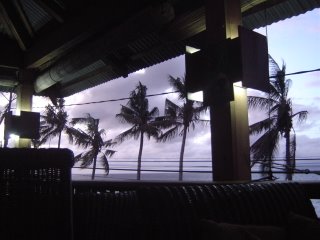 dili cafe
And the next day, Dili exploded.
 Fish on sticks. Popular road-side snack.
Com was hard to get to, and hard to leave. To get there took a 20k walk. Thought we walk until could hitch a ride, but there was NO traffic at all, so … ended up walking the whole way.
 buffalo being used to plough a rice paddy field, something we passed on the walk
 buffalo being used to plough a rice paddy field, something we passed on the walk
 goats are everywhere all over Timor. this one was in com.
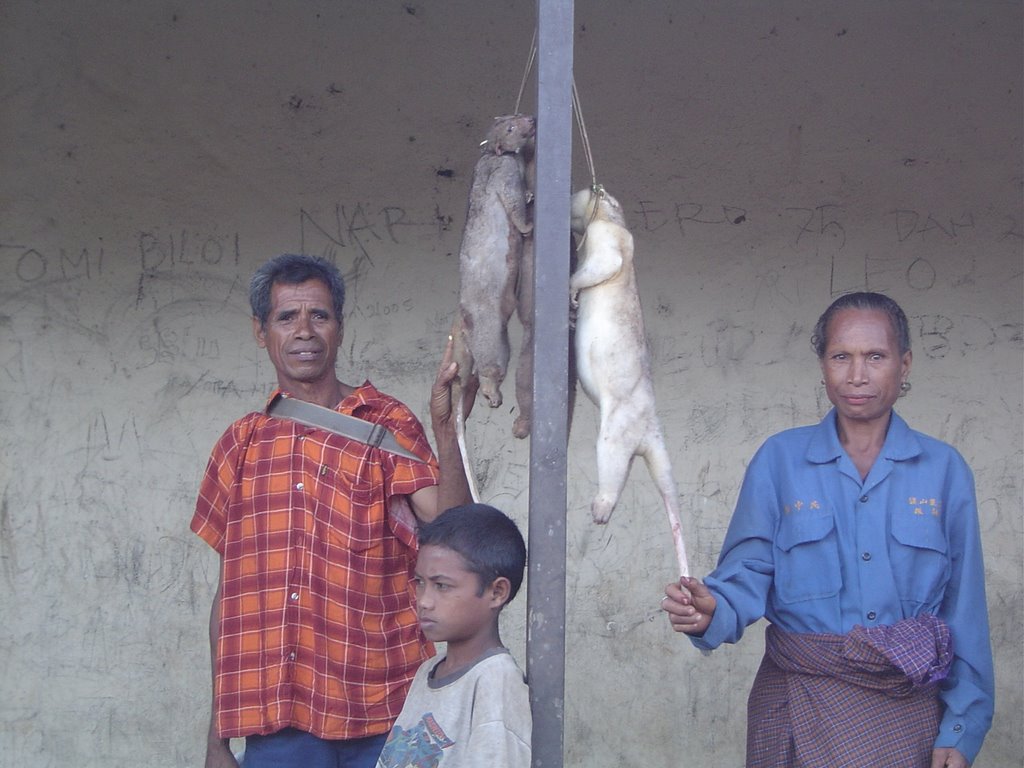 kuskus (type of possum) for sale at markets
Now smiling, we went with them to watch the independence celebrations: marching by groups of school kids and local government admin staff. With our new connections, we were able to get seats in the VIP tent – which was good because the sun was hot and the event dragged on for 2 hours. There was a bit more marching late afternoon, but that was it for the celebrations. A French warship that happened to be in the area decided to pull into Dili that afternoon, thinking that there’d be a huge party worth crashing. But there was nothing going on.
Dawn bus back into Dili the next day – a few incidents here – taxi from bus station to our accommodation took some short cut which meant driving along a dry river bed – farewell beer with the volunteers we’d met – dinner at an excellent and cheap Chinese place. Food in Timor much better than PNG: there is range and variety, and spices and flavour to the food.
Next morning there was time for a last wander around the dusty streets before airport + exit.
 dili cafe
Saturday, 10 June 2006
tourist in dili - baucau
The past few weeks I’ve been out and about. First it was to East Timor (via Cairns and Darwin), for an excellent week of travel. Tip for any future volunteer-travellers: find out if there are other volunteers from your organisation in your country of choice, and arrange to hook up with them whilst you’re there. It is always great to have a friendly face to talk to in a strange place, but they’re invaluable in terms of information – you get the shortcut to best places to eat – markets – things must see and do – places to avoid – local habits to watch out for – language-culture-custom advice – lp guide book – maps – accommodation tips (or maybe even a free bed if you’re lucky) – it’s a fantastic resource. And the bonus was that they were cool and smart and now I’ve got some new friends. Australia Volunteers International seems to have a pretty good screening device – don’t know if anyone’s very good at capacity building or whatever they’re hired for, but they’re certainly great people.
Stayed in Dili for a few days. UN Toyotas everywhere – and this was the reduced presence; can’t imagine what it must have been like 5 years ago. Lunch on first day was a reminder of what it’s like being a traveller – that is, a naïve idiot. Not knowing where to buy food, or any of the local languages, we ended up in a strange empty bakery buying ice cream and a sweet roll, apparently stuffed with peanut butter. Didn’t quite leave me sated, but the sugar gave us energy to climb the stairs up to the huge (20m) statue of Jesus that overlooks the bay Dili sits on. As we climbed up we were overtaken by Portuguese joggers. Climbed back down and rewarded selves with beers at a beach-side café, sitting back as the sun set. Holidays! Volunteering in PNG began to look rather dingy.
As it grew dark we walked up to another beach-side restaurant. Slowly little round bobbling lights appeared above the shallow water, as locals began fishing along the coral reefs at low-tide.
Did a bit of exploring the next day, but a few hours were eaten up booking our tickets to Bali the following week (there are only 2 international flights from Dili – Darwin or Denpasar). Had forgotten this type of admin/planning stuff also takes up a fair bit of time when travelling. Wandered around some markets. Had coffee in the famous Hotel Timor, with a few Portuguese ladies and some NZ police, and lunch with a volunteer mate.
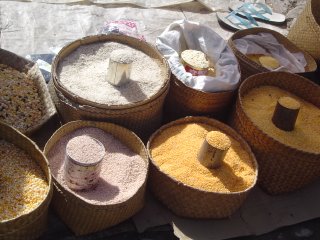 from the markets
The place was pretty quiet, she explained; maybe one third of the locals had fled the city to their villages when there had been riots at the Cormo markets a few weeks previous, when a few people died. Still, if the place was a bit tense it was certainly more relaxed, and safer, than PNG, I thought. On the way back to accommodation for an afternoon nap (it’s hot and everyone siestas, ok), explored some of the shops; entering one computer store, we turned to leave: the cabinets were all empty and the shelves had nothing on them. It looked like it hadn’t yet opened. But the manager called out and told us to wait; he had plenty of stock, it was just “out the back”. He had removed it from display since “the troubles”, he said. It’ll be back to normal next week, he assured us.
Had a Portuguese beer – a Bock – at the UN hangout City Café, which was exciting for me, having read about this place in The Floozy’s Guide to Dili, or something like that, a crappy book by an embarrassing aussie girl I will not give publicity to here.
Next day caught a bus and headed east, along to Baucau. Baucau is the largest town outside of Dili, but it is a pretty sleepy one at that. There was a beautiful old market place in the centre of town. It was built as a crescent shape, overlooking gardens, but the building itself was an empty pink shell. It had been burnt out around the Indonesian withdrawal in 1999, and had been abandoned ever since.
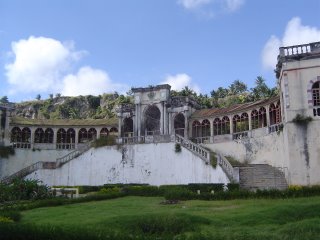
One remarkable feature of Timor’s landscape is the burnt out building. They’re everywhere: ever-present in the streets of Dili, spotted throughout the countryside, and visible at most turns in rural towns and villages. Someone said that 2/3 of buildings are ruins, though I’m not sure that it’s that high. Still, there is an incredible amount of ruins. Rough scars left as part of the environment, not knocked down, not fixed up, not inhabited by the homeless. Just left there.
Baucau: Following advice from the vols, we stayed in Bruno’s guesthouse. Wandered around town, met some other Australian visitors, went to a community centre, wandered past school children being given marching instruction by soldiers; dinner with the other Australians and some vols …
Following day went for a wander down the road we were staying on. Passed fields of rice paddies, and the abandoned Portuguese hospital (oddly, though it hadn’t been used for years the window panes were still intact, doors in place etc. A little graffiti but that was it). My travel buddy had out his big camera and was snapping away. Rounding a bend in the road, someone passed us on a motorbike. We saw a plainclothes guy fiddling with the strap of an M-16. As you do. He was leaning against a police vehicle. He looked up and cheerfully wished us good morning. I wanted a photo of this, but we weren’t sure if it was the right thing to do. We walked a bit further, and then turned and began to head back. The motorbike came up from behind us, and slowed down. “Are you looking for something?” we were asked. As the naïve tourist, I couldn’t pick the tone: was it one of warning? Was it threatening? Or was it just helpful? Had we seen too much? Was the big camera too overt, did we look like we were from the media, was this a problem? Who knows. We just smiled and said no thanks, and walked on.
It was hot in Baucau, and a swim was needed. There was a good looking pool in town, with sunbeds and a well-tended garden; the guidebook said it was filled with the help of natural springs, and it was usually packed out with locals. But today the pool was empty; not a drop inside. So we hiked down to the beach, about 5km down a sometimes steeply twisting road, passing through the usual tropical vegetation dotted with ruins here and there. I love the tropics. Growing up in the driest state of Australia, with eucalypts and dry, tough foliage as “bush”, the stuff in the tropics is more exciting and mysterious, more movie-like.
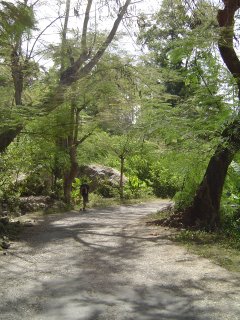
The beach at the bottom was a bit average, but had a quick swim anyway, watched by about 12 kids who lined themselves up, as if for a show. As we began the walk back up the huge, looming hill, a mikrolet (public bus) cunningly purred along beside us and offered us a ride to the top. We ceded and hopped in.
Had a beer in the late afternoon at the town’s biggest hotel – the Pausada, pink and outlandish. They had 3 monkeys in a small cage; one was held to the ground by a 40cm chain attached to a rock. Not sure what custom this is: local? Indonesian? Portuguese?
Stayed in Dili for a few days. UN Toyotas everywhere – and this was the reduced presence; can’t imagine what it must have been like 5 years ago. Lunch on first day was a reminder of what it’s like being a traveller – that is, a naïve idiot. Not knowing where to buy food, or any of the local languages, we ended up in a strange empty bakery buying ice cream and a sweet roll, apparently stuffed with peanut butter. Didn’t quite leave me sated, but the sugar gave us energy to climb the stairs up to the huge (20m) statue of Jesus that overlooks the bay Dili sits on.
 As we climbed up we were overtaken by Portuguese joggers. Climbed back down and rewarded selves with beers at a beach-side café, sitting back as the sun set. Holidays! Volunteering in PNG began to look rather dingy.
As it grew dark we walked up to another beach-side restaurant. Slowly little round bobbling lights appeared above the shallow water, as locals began fishing along the coral reefs at low-tide.
Did a bit of exploring the next day, but a few hours were eaten up booking our tickets to Bali the following week (there are only 2 international flights from Dili – Darwin or Denpasar). Had forgotten this type of admin/planning stuff also takes up a fair bit of time when travelling. Wandered around some markets. Had coffee in the famous Hotel Timor, with a few Portuguese ladies and some NZ police, and lunch with a volunteer mate.
 from the markets
Had a Portuguese beer – a Bock – at the UN hangout City Café, which was exciting for me, having read about this place in The Floozy’s Guide to Dili, or something like that, a crappy book by an embarrassing aussie girl I will not give publicity to here.
Next day caught a bus and headed east, along to Baucau. Baucau is the largest town outside of Dili, but it is a pretty sleepy one at that. There was a beautiful old market place in the centre of town. It was built as a crescent shape, overlooking gardens, but the building itself was an empty pink shell. It had been burnt out around the Indonesian withdrawal in 1999, and had been abandoned ever since.

One remarkable feature of Timor’s landscape is the burnt out building. They’re everywhere: ever-present in the streets of Dili, spotted throughout the countryside, and visible at most turns in rural towns and villages. Someone said that 2/3 of buildings are ruins, though I’m not sure that it’s that high. Still, there is an incredible amount of ruins. Rough scars left as part of the environment, not knocked down, not fixed up, not inhabited by the homeless. Just left there.
Baucau: Following advice from the vols, we stayed in Bruno’s guesthouse. Wandered around town, met some other Australian visitors, went to a community centre, wandered past school children being given marching instruction by soldiers; dinner with the other Australians and some vols …
Following day went for a wander down the road we were staying on. Passed fields of rice paddies, and the abandoned Portuguese hospital (oddly, though it hadn’t been used for years the window panes were still intact, doors in place etc. A little graffiti but that was it). My travel buddy had out his big camera and was snapping away. Rounding a bend in the road, someone passed us on a motorbike. We saw a plainclothes guy fiddling with the strap of an M-16. As you do. He was leaning against a police vehicle. He looked up and cheerfully wished us good morning. I wanted a photo of this, but we weren’t sure if it was the right thing to do. We walked a bit further, and then turned and began to head back. The motorbike came up from behind us, and slowed down. “Are you looking for something?” we were asked. As the naïve tourist, I couldn’t pick the tone: was it one of warning? Was it threatening? Or was it just helpful? Had we seen too much? Was the big camera too overt, did we look like we were from the media, was this a problem? Who knows. We just smiled and said no thanks, and walked on.
It was hot in Baucau, and a swim was needed. There was a good looking pool in town, with sunbeds and a well-tended garden; the guidebook said it was filled with the help of natural springs, and it was usually packed out with locals. But today the pool was empty; not a drop inside. So we hiked down to the beach, about 5km down a sometimes steeply twisting road, passing through the usual tropical vegetation dotted with ruins here and there. I love the tropics. Growing up in the driest state of Australia, with eucalypts and dry, tough foliage as “bush”, the stuff in the tropics is more exciting and mysterious, more movie-like.
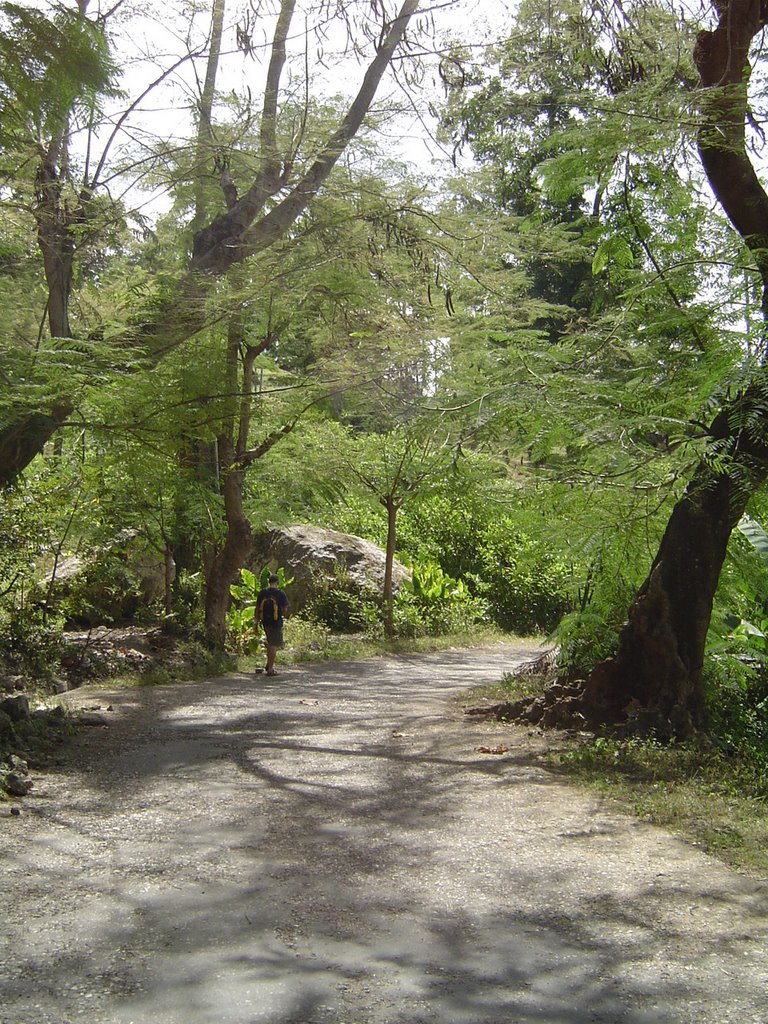
The beach at the bottom was a bit average, but had a quick swim anyway, watched by about 12 kids who lined themselves up, as if for a show. As we began the walk back up the huge, looming hill, a mikrolet (public bus) cunningly purred along beside us and offered us a ride to the top. We ceded and hopped in.
Had a beer in the late afternoon at the town’s biggest hotel – the Pausada, pink and outlandish. They had 3 monkeys in a small cage; one was held to the ground by a 40cm chain attached to a rock. Not sure what custom this is: local? Indonesian? Portuguese?
Friday, 9 June 2006
couple of PNG snapshots

The Rainforest Habitat (Unitech, Lae) is worth a visit if you ever head down that way. I’ve visited Lae before, but hadn’t been to this spot until I went on Monday. There are a lot of tree kangaroos (the largest collection of the species in the world; a lot are in medium-sized cages out the back), lots of eagles and birds in general (including cassowaries and birds of paradise). The best times to go are when it opens (10am) and just before closing (say 3ish; closes at 4); these are feeding times and everyone’s waking up and having a stretch (it gets very hot during the day and the best spot is somewhere dark and shady; not good for two-legged visitors who want to peer at wildlife).
There’s currently a volunteer down there (“Since his arrival three weeks ago a new computer was bought…”), a bloke from my home town’s zoo: Gert Skipper. (Or that’s the name he goes by. Sounds a bit like something you might make up if you were on the run, pretending to be a zoo keeper…Sorry Skipper. Just kidding.) It’s cheap – only 7kina – and there’s even a café in the first big aviary-enclosure you visit. Recommended.
**
We’re in our dry period in Goroka. Beautiful sunny days, cold nights. Bit dusty. And the ground is cracking.
**
It’s pay fortnight today in the Eastern Highlands Province (pay fortnight = government and main business payday). Goroka town was busy; people from surrounding villages and more remote areas had made the trip in to hit the shops. There were trucks in from Bena and Lufa and community schools, parked on the main street whilst everyone lucky enough to score a lift went and shopped. There were crowds around all of the supermarkets. People coming out were carrying bags bursting with rice, oil, tinned fish (mackerel or tuna), 2-minute noodles. Most of it will be eaten this weekend (probably with beer), before people go back to waiting for the next pay fortnight, returning to kaukau (sweet potato), a few greens (like pumpkin leaves, called pumpkin tips here), spring onions + rice or white bread rolls if you’re lucky (bread’s sweet here, with a lot of sugar).
The images of those bags of store goods are on my mind. In a few weeks they’ll be a fond memory: I’m moving out of GKA central, and heading down to some villages Kokoda way. Where there are no trade stores. Where there is no electricity. Where I’ll wash in a stream, or a waterfall. And where I’ll be collecting a few more stories for the memoirs.
Tuesday, 30 May 2006
more on timor
ABC Australia says: "A top-level crisis meeting between members of the East Timorese government is yet to reconvene. The meeting has so far failed to settle differences between President Xanana Gasmao and his prime minister, Mari Alkatiri. Our reporter in Dili, Peter Cave, says it is now apparent that the prime minister, who is widely blamed for the political and security crisis will survive, but that the president will emerge with control over national security and defence."
There was undisguised contempt and frustration with Alkatiri amongst the whiteskins when we were there - but apparently he had a lot of support amongst locals. Enough to maintain his position anyway. Yes there have been various triggers in the past couple of months, but one has to wonder about political intervention. How much of this has been allowed to escalate because of personal battles at the top? It's an age-old situation - the road to hell was paved with good intentions, remember - but it still depresses.
And so does the looting, destruction and burning of buildings. This will sound a little naive, but I was amazed at how actual amount of buildings that are ruined shells - all over the country. Alomst 40% of structures were burnt out holes, still empty 7 years later. These palpable scars covered the landscape. And more are being added?
Sori tru.
and in the meantime, keep reading dili-gence
road trip, timor leste
One day in Timor, maybe a week and a half ago, we caught a bus out from Baucau. It was going east along the coast, then south down to the town of Los Palos; we wanted to stick to the coastal road so we got off at a village named Lautem. The plan was to catch a bus from Lautem to Com, a seaside village further east. We were unaware that there is very little traffic travelling this way. (If there had been a bus that day, it would have appeared very early in the morning; it was now around noon.) Seeing no bus, we decided to start the walk - 20kms to Com - and hopefully hitch a lift.
There was no traffic, no lift. We walked the 20kms.
On August 30 1999, the people of East Timor voted resoundingly for independence from Indonesian rule in a referendum. What followed was a nightmarish period of violence as the Indonesians withdrew; Indonesian army and police officers, and pro-Indonesian militia, killed hundreds; over half the population were displaced.
On September 25 1999, a militia team commander and several others drove from Com to Lautem. They said they were going to get rice from a warehouse near Lautem, but “[t]he most obvious indication that they were not in fact intending to get rice was that they drove right past the rice warehouse.” They were also armed with SKS automatic weapons (used by Indonesian security forces) and carrying machetes and knives.
About one kilometer past Lautem, the militiamen passed two young men pushing a cart. The militiamen chased the two men, hurling rocks and shooting at them. One of the men was wounded but managed to escape. The second was caught and tied to a tree near the side of the road.
The militiamen next set up a roadblock, placing large stones on the road. Some used a nearby hill as a lookout, and others took up positions in a ditch, aiming their weapons on the road. And then they waited.
“At about 2:30 p.m. the same day, a gray four-wheel drive vehicle came into sight from the direction of Lautem heading west toward Baucau. There were eight people in the vehicle, including two nuns, three Brothers/Priests, a journalist and two other lay persons.”
When the car stopped at the roadblock, three militiamen simply opened fire. The driver and some passengers were killed.
“As one of the surviving passengers tried to get out of the vehicle, a militiaman grabbed him and dragged him to the river where he was shot and killed. The same militiaman poured petrol over three other survivors and lit them on fire. One of the three ran from the car to the river”, but was shot and killed.
A nun got out of the car and, kneeling on the side of the road, began to pray. Someone slashed her with a machete. One of the nuns, Sister Erminia, got out of the vehicle and knelt down by the roadside to pray. As she prayed, a militiaman (Horacio) slashed her with a machete. Another militiamen shouted “Don’t kill a Sister!” but the commander roared: “Kill them all!”
Someone picked up the nun and threw her in the river, then shot her twice.
The militiamen pushed the car into the river. There was still one person alive in the car; he tried to get out, but was shot and killed.
The militiamen then remembered their earlier capture, one of the men pushing a cart who they had tied to a tree. One militiaman cut off his ear and hacked his neck with a sword, then pushed him into the river and shot him. “Finally [the commander] Joni Marques threw a grenade into the river, where the dead and wounded lay, to be sure that there would be no survivors.”
East Timor 1999 Crimes Against Humanity Geoffrey Robinson 2003
Monday, 29 May 2006
images from dili
 View of Dili airport from the plane.
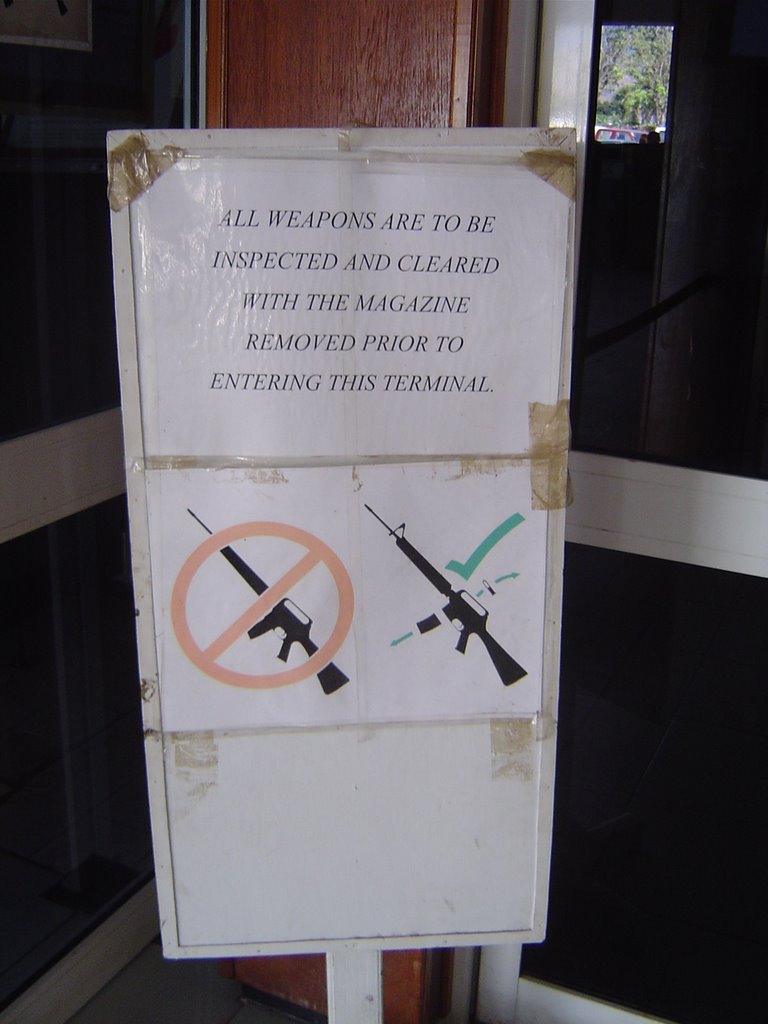
We saw the above sign at the airport, as we were leaving, and had a laugh about it. (And about the separate check-in desk reserved for UN personnel.) Less funny now.
"I can’t see things improving greatly for a number of days except if you are journalist. For them, this is what they get up in the morning for." We also enviously eyed some foreign correspondents, but as the above quote points out, there's ambivalence there too. Dili-gence writes some good tales about what has been happening, as it has been happening.
Still hard to reconcile good holiday memories with the terrible news of what has been going on in Dili. Had some excellent adventures, and have lots of stories, but still feeling a bit tired after a lot of travelling - and there's still a big pile of washing to do (how much I wish PNG had Bali's amazing cheap laundry services, where everything is scrubbed and comes back wrapped in plastic and only takes a few hours. Ah, travel can spoil you..) and work to get back into and oh some dirty harry movies to watch (yay! thanks n) and so stories will come later.
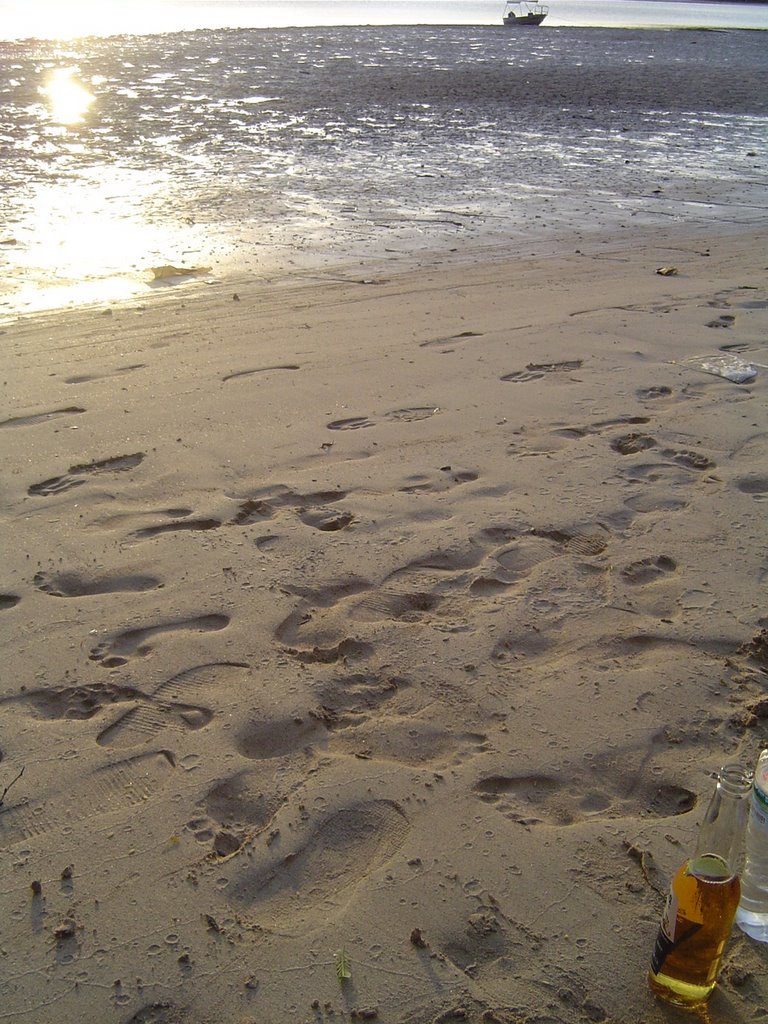 Dili beach, two weeks ago
Wednesday, 24 May 2006
so: bali
strange place - some great sections, but a lot of touristy places crammed full of shops shops shops. am amazed at how many shops they can squeeze into a block, and how many of these shops simply sell the same things. it all seems to revolve around shopping; if you don't buy into the capitalistic pastime there's almost nothing to do (and the beaches aren't all they're cracked up to be). but i'm just feeling a little jaded. flying in from a developing country into this makes you a bit cynical.
anyway, flying out tonight/tomorrow at 2.30am - onwards to jayapura - vanimo, png.
anyway, flying out tonight/tomorrow at 2.30am - onwards to jayapura - vanimo, png.
Subscribe to:
Posts (Atom)